Many sourcing problems in wall switch and socket projects do not begin with obvious negligence. They begin with reasonable assumptions that feel safe at quotation stage and only become risky after approval, shipment, or repeat orders.
This page focuses on common buyer mistakes. It is not the same as a manufacturer-screening framework. The goal here is to show where sourcing logic usually breaks down before buyers realize what changed.
Based on quotation comparison, sample review, repeat-order follow-up, and OEM troubleshooting in wiring accessories, most sourcing mistakes are not dramatic. They are usually small wrong assumptions about price, certification, customization, production ownership, or long-term consistency.

Contents
- Why These Sourcing Mistakes Keep Repeating
- Mistake 1: Treating Unit Price as the Whole Cost Story
- Mistake 2: Assuming All Certifications Mean the Same Thing
- Mistake 3: Over-Customizing Too Early in OEM Projects
- Mistake 4: Not Knowing Who Actually Controls Production
- Mistake 5: Judging Reliability by the First Shipment Only
- Mistake 6: Taking “No Problem” Answers at Face Value
- How Experienced Buyers Reduce These Risks
- FAQ
Why These Sourcing Mistakes Keep Repeating
At the beginning of cooperation, many suppliers look similar. Samples work, documents exist, communication sounds smooth, and pricing differences appear manageable. The real differences usually show up later, when one of three things happens: the first bulk shipment arrives, specifications need to be repeated, or the market starts giving feedback.
That is why this topic matters. Buyers are rarely choosing between an obviously good supplier and an obviously bad one. They are usually choosing between suppliers that look acceptable on the surface but operate with very different control discipline underneath.
| What buyers often assume | What usually happens later |
|---|---|
| The cheaper quote is just more efficient | The cost difference may actually come from weaker control or lower specification |
| The certificate means the same thing everywhere | Market scope, approval logic, and practical suitability may still differ |
| A good first order proves long-term reliability | Later shipments reveal the real repeat-order discipline |
If you want the broader buyer framework behind supplier comparison before going through the specific mistakes, start with our guide to an electrical switch and socket manufacturer in China.
Mistake 1: Treating Unit Price as the Whole Cost Story
Price comparison is unavoidable. The mistake is treating unit price as the whole sourcing picture. In wall switch and socket manufacturing, small differences in conductor material, structure, tolerances, or process control often do not show up immediately. They show up later through installation inefficiency, unstable repeat orders, or higher after-sales cost.
Lower unit price can be reasonable when the system behind it is stable. The real problem begins when lower price is achieved by removing control rather than improving efficiency. Experienced buyers therefore ask not only “why is this cheaper?” but “what exactly changed in the product or process to make it cheaper?”
If you need the product-definition side of that same question, our guide to electrical wall switch and socket manufacturer capability explains how buyers judge what the factory really controls behind the quotation.
Mistake 2: Assuming All Certifications Mean the Same Thing
Certifications are frequently misunderstood even by experienced buyers. Documents such as CE declarations, test reports, or supplier statements indicate a certain compliance scope. They do not automatically guarantee suitability for every region, installation environment, or project requirement.
- one certificate does not cover every market automatically
- a document does not replace local installation logic
- passing a test does not by itself prove long-term field performance
Suppliers who explain clearly what a file covers and what it does not are usually more reliable than suppliers who use certification language as a sales shortcut. If your immediate concern is how OEM scope and standards claims should be handled before approval-sensitive projects move forward, see our OEM and ODM standards and scope guide.
Mistake 3: Over-Customizing Too Early in OEM Projects
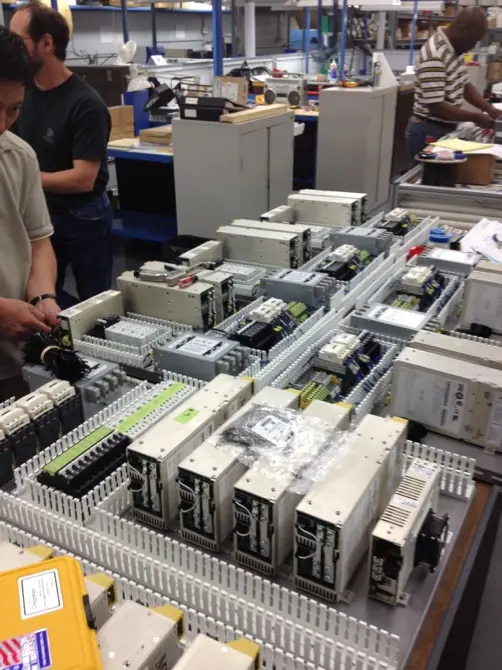
OEM customization can be commercially useful, but it works best when it starts from a stable platform and stays inside clear control boundaries. Problems usually begin when buyers push too early into safety-sensitive structural changes before enough validation, order history, or engineering discipline is in place.
- safer early customization: appearance, branding, packaging, module combinations
- higher-risk early customization: internal contact systems, safety dimensions, core structure
Early over-customization often increases certification complexity, production variability, and repeat-order risk. That is why many disciplined buyers prefer to launch from a proven platform first and only then widen the customization boundary. The cleaner next step for that discussion is our OEM and ODM cooperation guide.
Mistake 4: Not Knowing Who Actually Controls Production
One of the most common sourcing misunderstandings is assuming that every supplier presenting products is also the party that controls production decisions. In practice, the more useful question is not how a company describes itself, but who decides when specifications change, who can trace quality issues to root causes, and who carries responsibility when repeat orders drift.
When production control is fragmented across multiple parties, consistency becomes harder to maintain. This usually becomes visible after repeated orders rather than at sample stage. If you want the process-control side of that risk explained in more detail, our wall switch and socket manufacturing process and quality guide shows how disciplined factories manage that control path.
Mistake 5: Judging Reliability by the First Shipment Only
The first shipment is rarely representative of the whole relationship. Initial orders often receive extra attention, tighter inspection, and closer communication. That is normal. The real test comes later, when order flow becomes routine, small changes are requested, and market feedback has to be absorbed without losing consistency.
Long-term reliability is not demonstrated through one excellent batch. It is demonstrated through the ability to repeat the same quality logic across multiple cycles. Buyers who want the structured version of that review can continue to our guide on how to choose a reliable electrical wall switch and socket manufacturer.
Mistake 6: Taking “No Problem” Answers at Face Value
In sourcing conversations, “no problem” is often meant politely. It can still be a warning sign. Wall switch and socket manufacturing has technical boundaries around standards, materials, structure, and repeatability. Suppliers who explain those boundaries openly are usually more predictable than suppliers who promise unlimited flexibility too early.
Clear boundaries are not a weakness. They are often a sign of technical ownership. When a supplier explains where customization stops, where certification gets harder, or where repeat-order risk starts to rise, that usually helps the buyer more than a fast “everything is possible” answer.

How Experienced Buyers Reduce These Risks
Experienced buyers rarely rely on one signal alone. They watch patterns: how questions are answered, whether explanations stay process-based or drift into appearance-only language, how the supplier reacts when uncertainty is acknowledged, and whether the same logic stays stable across sample, file, and production discussion.
Risk reduction in sourcing is less about avoiding every problem in advance and more about choosing a partner that manages problems systematically. If the first-stage supplier comparison is your immediate bottleneck, our commercial wiring accessories supplier guide is the cleaner next step.
Review basis used in this page: quotation comparison, sample-to-bulk consistency review, OEM troubleshooting, repeat-order follow-up, and buyer-side analysis of where sourcing assumptions usually break down in wall switch and socket projects. This page supports buyer evaluation. It does not replace legal, customs, or market-specific certification advice.
FAQ
What is the most common mistake when comparing suppliers?
Treating unit price as if it explains the whole supply system. In practice, the hidden differences usually sit in materials, structure, version control, and repeat-order discipline.
Why is early over-customization risky?
Because it can widen certification scope, increase production variability, and weaken later consistency before the base platform has proved itself in real orders.
Does a good first shipment prove the supplier is reliable?
No. The first shipment often receives extra care. Real reliability becomes clearer across later production cycles and repeat-order handling.
Why are “no problem” answers risky in technical sourcing?
Because real manufacturing always has boundaries. Suppliers who explain those limits clearly are often easier to trust than suppliers who promise everything immediately.
Conclusion
Most sourcing mistakes are understandable. They come from time pressure, incomplete assumptions, and supplier differences that do not show up early. In wall switch and socket projects, buyers usually reduce risk not by becoming suspicious of everything, but by learning where the usual wrong assumptions begin and how to test them before those assumptions become expensive.